Sunday curry · serves 4
Andhra Chepala Pulusu (Andhra Tamarind Fish Curry)
చేపల పులుసు · आंध्रा मछली करी · चिञ्चा-मत्स्यव्यञ्जनम् · Chepala Pulusu · Andhra Machhli Curry
Chepala pulusu is the tamarind fish curry of coastal Andhra, made with special care in the Godavari districts: thick fish steaks simmered in a sour, red tamarind gravy with onions, green chillies and curry leaves. It is a Sunday lunch dish, and many homes cook it in a clay pot and keep it for the next day, when the gravy has soaked into the fish.
Our turmeric powder goes into the marinade and the gravy. Sannam chilli powder gives the pulusu its deep red colour and a steady heat that balances the tamarind. This recipe serves 4.
- Prep25 min
- Cook35 min
- Total60 min
- Serves4
Prep includes the 15-minute marinade. The curry tastes even better after resting a few hours.
In short
Marinate fish with salt, turmeric and chilli powder, fry onions and spices, boil them in tamarind water, then simmer the fish gently in the gravy without stirring.
చేప ముక్కలకు ఉప్పు, పసుపు, కారం పట్టించండి. ఉల్లిపాయలు, మసాలా వేయించి చింతపండు రసంలో మరిగించి, చేప ముక్కలు వేసి కలపకుండా ఉడికించండి. పులుసు పొద్దున చేసి సాయంత్రం తింటే ఇంకా రుచిగా ఉంటుంది; ముక్కలు చెంచాతో కాకుండా గిన్నె తిప్పుతూ కలపండి.
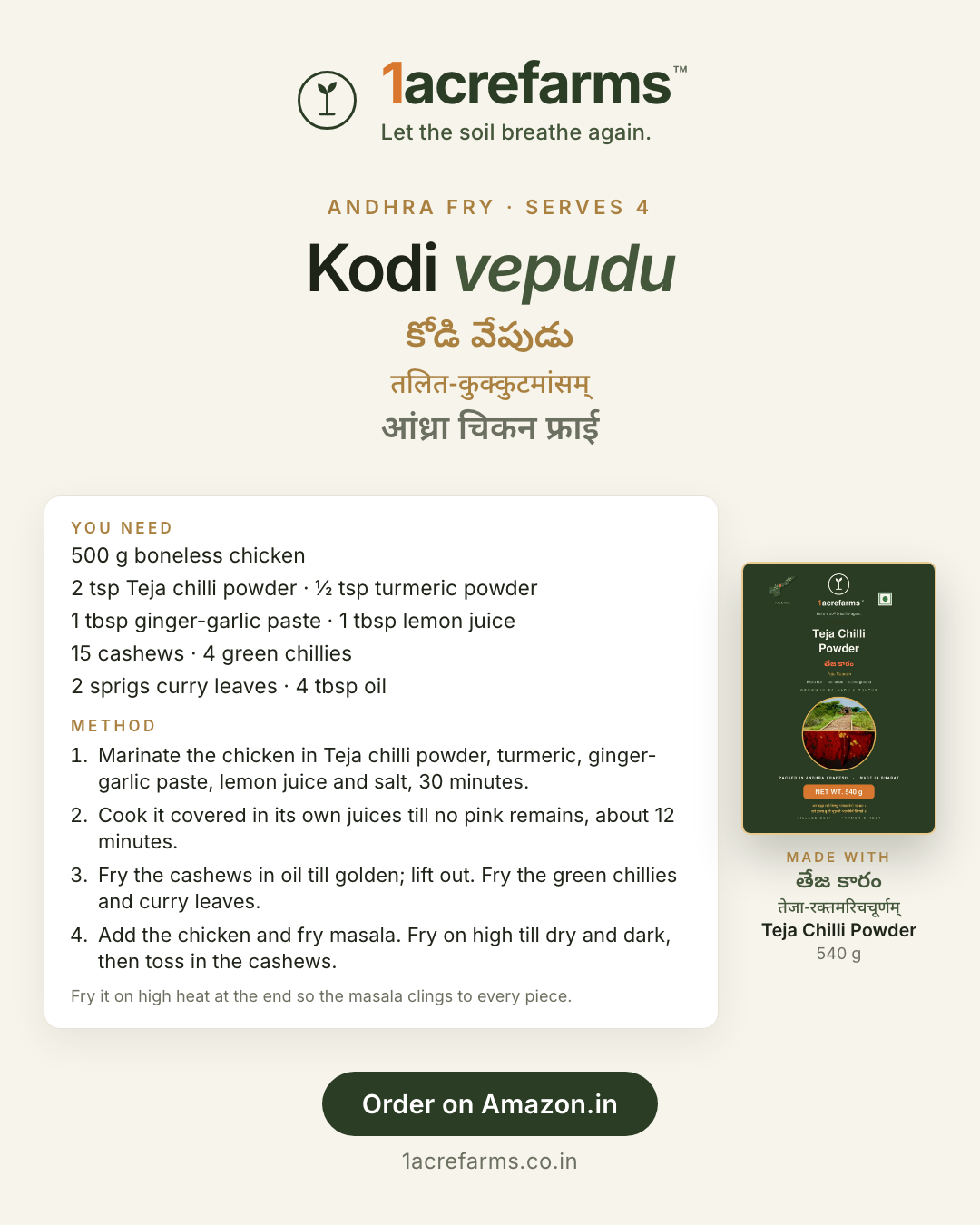
मछली पर नमक, हल्दी और लाल मिर्च पाउडर लगाएँ। प्याज़ और मसाले भूनकर इमली के पानी में उबालें, फिर मछली डालकर बिना चलाए धीमी आँच पर पकाएँ। 500 ग्राम मछली के लिए नींबू जितनी इमली (लगभग 40 ग्राम) और 2 बड़े चम्मच सन्नम मिर्च पाउडर काफ़ी है।
Ingredients serves 4
For the fish
- 500 g fish pieces firm fish cut into thick steaks: rohu, catla (bochcha), korameenu (murrel) or seer fish (vanjaram)
- 1 tsp salt for the marinade
For the pulusu
- 40 g tamarind about two lemon-sized balls, soaked in 2 cups warm water for 15 minutes
- 4 tbsp oil
- ¼ tsp fenugreek seeds menthulu
- ½ tsp mustard seeds
- ½ tsp cumin seeds
- 2 onions thinly sliced
- 3 green chillies slit
- 2 sprigs curry leaves
- 1 tsp ginger-garlic paste
- 1 tomato chopped (optional)
- ½ tsp turmeric powder ¼ tsp for the marinade, ¼ tsp for the gravy
- 2 tbsp Sannam chilli powder 1 tsp for the marinade, the rest for the gravy
- 1 tbsp coriander powder
- 1 tsp salt for the gravy, or to taste
- 2 tbsp chopped coriander leaves
Method
- Wash the fish pieces gently in water two or three times and drain them well.
- Rub the fish with salt, turmeric and 1 tsp chilli powder; rest 15 minutes. Use 1 tsp salt and ¼ tsp of the turmeric powder for the marinade.
- Squeeze the soaked tamarind well in its water and strain it. You should have about 2 cups of thin tamarind water.
- Heat the oil in a wide pan or clay pot on medium heat. Add the fenugreek seeds, mustard seeds and cumin seeds and let them splutter, taking care that the fenugreek does not turn dark.
- Fry the onions, chillies and curry leaves in oil till soft; add the spice powders. Fry the onions about 6–8 minutes until soft and light golden, add the ginger-garlic paste and tomato and cook 2 minutes, then add the remaining turmeric powder, the remaining Sannam chilli powder and the coriander powder and stir for 30 seconds.
- Pour in the tamarind water and boil 10 minutes till the oil rises. Add the salt for the gravy; the raw tamarind smell should be gone and the gravy slightly thick.
- Taste the gravy. It should be clearly sour, salty and hot, as the fish will take in some of it.
- Slide in the fish and simmer covered 10–12 minutes; swirl, do not stir. Lay the pieces in one layer, spoon gravy over them and keep the heat low.
- Check one piece at the thickest part: the fish is cooked when the flesh is white or opaque right through and comes away from the bone easily.
- Sprinkle the coriander leaves, switch off and let the pulusu rest at least 30 minutes, covered, before serving.
Tips
- Swirl the pan instead of stirring so the fish stays whole.
- Pick a firm fish with thick steaks; thin fillets break up in the long simmer.
- Sannam chilli powder gives a medium heat. Use 1½ tbsp for a milder pulusu, or the full 2 tbsp for the usual Andhra heat.
- Boil the tamarind gravy well before the fish goes in; once the fish is in, you cannot cook it much longer without it breaking.
Variations
- Teja chilli powder: for a hotter pulusu, use 1 tbsp Teja chilli powder in place of the Sannam in the gravy. Teja is very hot; start with 2 tsp if unsure.
- Royyala pulusu: use 400 g cleaned prawns and simmer only 5–6 minutes, until they turn pink and curl.
- Mamidikaya pulusu: in summer, Godavari homes add slices of raw mango and use less tamarind.
Serving
Serve with hot steamed rice and sliced onions. Many Godavari homes serve it the next day, when the flavours have settled.
Storage
Keep leftovers covered in the fridge and eat within 2 days. Reheat gently in the pan without stirring, until steaming hot all the way through.
Questions
Which fish is best for chepala pulusu?
Firm river or sea fish cut into thick steaks: rohu, catla (bochcha), murrel (korameenu) or seer fish. Bony small fish also work but need gentle handling.
Why does chepala pulusu taste better the next day?
Resting gives the fish time to soak up the tamarind and chilli gravy, and the sourness and heat even out. That is why many homes cook it in the morning for dinner or the next day.
How do I stop the fish from breaking in the curry?
Use thick steaks, add them only after the gravy has boiled, keep the heat low and swirl the pan instead of stirring with a spoon.
How much tamarind for 500 g fish?
About 40 g, a lemon-sized ball, soaked in 2 cups of warm water. Use a little less if you add tomato or raw mango.