Guide · chilli powder
How to check chilli powder at home
సన్నం కారం · తేజ కారం · सन्नम मिर्च पाउडर · तेजा मिर्च पाउडर · सन्नम-रक्तमरिचचूर्णम् · तेजा-रक्तमरिचचूर्णम् · Kaaram · Lal mirch
FSSAI's standard says chilli powder must be dry and free from dirt, added colouring matter, flavouring matter and mineral oil. Its testing manual has methods for finding brick powder, added starch, added colour, colours that dissolve in oil, and the dyes Sudan III and Rhodamine B.
Some of this you can check in your kitchen with a glass of water, your fingers and a few drops of iodine. Some, like Sudan dyes, only a lab can find. This guide covers both. Try the checks on any chilli powder you buy.
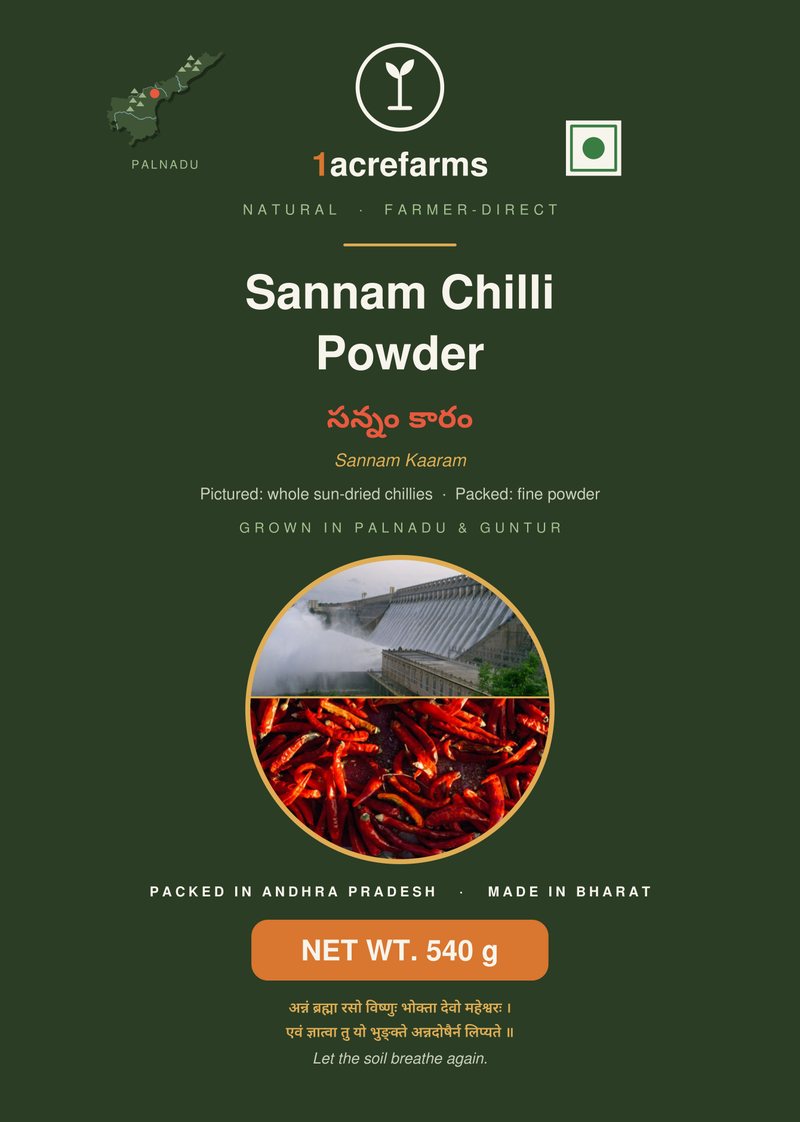 Sannam Chilli Powder
సన్నం కారం · सन्नम-रक्तमरिचचूर्णम्
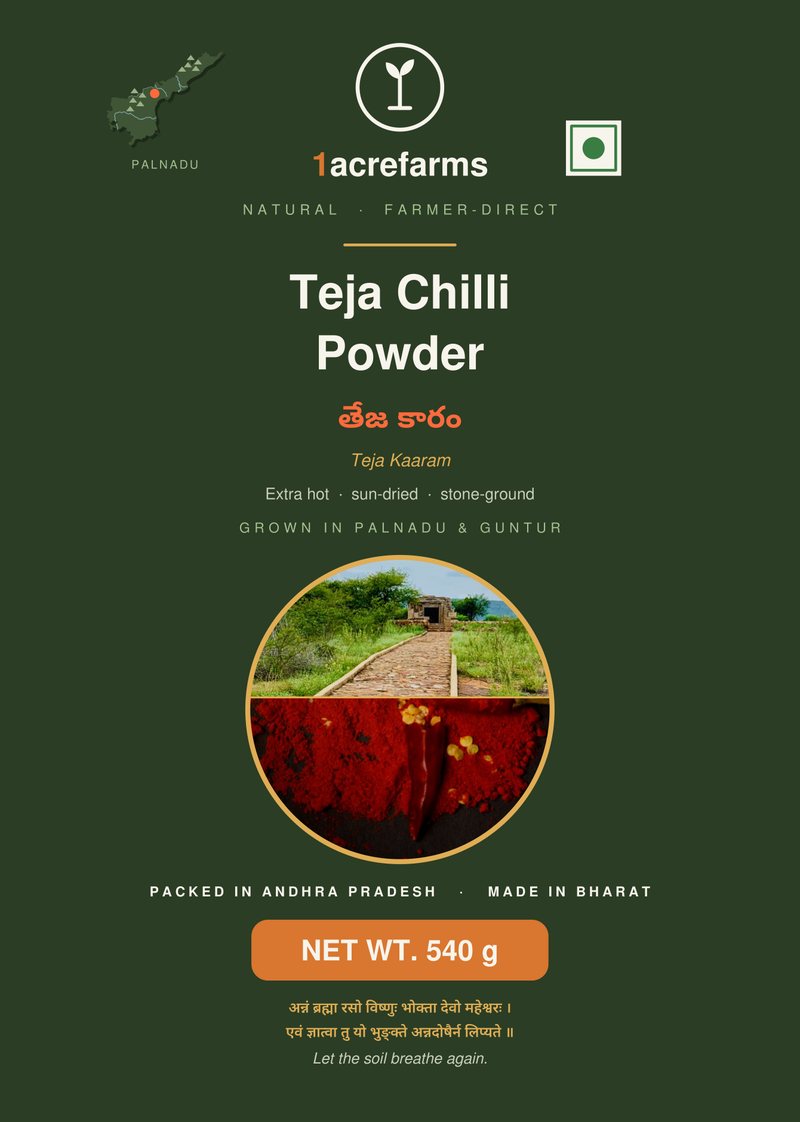 Teja Chilli Powder
తేజ కారం · तेजा-रक्तमरिचचूर्णम्
In short
Sprinkle a teaspoon of chilli powder on a glass of water and do not stir. Colour streaks running down at once point to added colour, and bits still floating after the powder sinks point to sawdust or bran. Rub the sediment: grit points to brick powder or sand, a soapy feel to soapstone. Iodine turning the powder blue points to added starch. Dyes such as Sudan I do not show in water; for those, use a lab.
ఒక గ్లాసు నీటిపై చెంచా కారం చల్లి, కలపకుండా ఉంచండి. వెంటనే రంగు గీతలు కిందికి దిగితే రంగు కలిపి ఉండొచ్చు. పొడి అడుగుకు చేరాక కూడా పైన తేలేవి రంపపు పొట్టు లేదా తవుడు కావచ్చు. అడుగున మిగిలినదాన్ని వేళ్లతో రుద్దండి: గరుకుగా ఉంటే ఇటుక పొడి లేదా ఇసుక కావచ్చు, సబ్బులా నునుపుగా ఉంటే బలపం రాయి కావచ్చు. అయోడిన్ చుక్కలతో నీలం రంగు వస్తే పిండిపదార్థం కలిపి ఉండొచ్చు. సూడాన్ I వంటి రంగులు నీటి పరీక్షలో కనిపించవు; వాటికి ల్యాబ్ పరీక్ష కావాలి.
एक गिलास पानी पर एक चम्मच लाल मिर्च पाउडर छिड़कें और बिना हिलाए छोड़ दें। अगर तुरंत रंग की धारियाँ नीचे उतरें, तो रंग मिलाया गया हो सकता है। पाउडर बैठने के बाद भी ऊपर तैरते कण बुरादा या चोकर हो सकते हैं। तली में बचे हिस्से को उँगलियों से रगड़ें: किरकिरा लगे तो ईंट का चूरा या रेत, साबुन जैसा चिकना लगे तो सोपस्टोन हो सकता है। आयोडीन की बूँदों से नीला रंग आए तो स्टार्च मिलाया गया हो सकता है। सूडान I जैसे रंग पानी की जाँच में नहीं दिखते, उनके लिए लैब टेस्ट ज़रूरी है।
What FSSAI checks chilli powder for
- Added colour
- FSSAI's chilli powder standard does not allow added colouring matter. FSSAI's tests look for colours that dissolve in water, colours that dissolve in oil, and the dyes Sudan III and Rhodamine B.
- Sudan dyes
- Sudan I is used to colour oils, fats, waxes, and shoe and floor polish. The Indian Standard on quick tests for adulterants says Sudan III, much used in wax polishes, has been used to make chilli pods shine, and so finds its way into chilli powder.
- Brick powder, sand, salt, talc and soapstone
- FSSAI's household tests list these for chilli powder. The Indian Standard says brick powder is mixed in to increase bulk.
- Starch
- FSSAI's manual tests powdered spices other than turmeric for added starch. The Indian Standard notes that colour is also added to chilli powder to hide added starch.
- Sawdust and bran
- Both float on water, which is how FSSAI's household tests spot them.
Check 1: the water glass and the rub test
- Fill a clear glass with water at room temperature.
- Sprinkle one teaspoon of chilli powder on top. Do not stir.
- Watch the first minute. Look for coloured streaks running down from the powder.
- Leave it until most of the powder has sunk. Look at the surface for bits still floating.
- Pour off most of the water and rub the sediment at the bottom between your fingers.
| What you see or feel | What it can point to |
|---|---|
| Colour streaks running down at once | Added colour that dissolves in water |
| Bits still floating after the powder sinks | Sawdust or bran |
| Sediment that feels gritty | Brick powder or sand |
| White sediment that feels soapy and smooth | Soapstone |
None of these
No sign of what this check can find.
Any one of these
Possible adulteration. Stop using that batch and get it tested.
Why it works. Colours that dissolve in water leave the powder and run down as streaks. Brick powder is heavy and settles to the bottom, while sawdust and bran float.
What it misses. Dyes that do not dissolve in water stay in the powder. Sudan I is one: it does not dissolve in water, and it is used to colour oils, fats and waxes. Chilli powder coloured with such dyes can pass this check. Only a lab test can rule them out.
Wash your hands after the rub test, before you touch your eyes.
Check 2: the iodine test for starch
FSSAI's manual uses the iodine test for powdered spices other than turmeric, so chilli powder can take it. Our turmeric guide explains why turmeric is left out.
- Put half a teaspoon of chilli powder on a white saucer.
- Add a few drops of tincture of iodine from a chemist.
- Look at the colour where the drops land.
- Throw that powder away afterwards.
No blue colour
No sign of added starch.
A blue colour
Points to added starch. Stop using that batch and get it tested. On red powder a faint change is hard to judge, so if you are not sure, let a lab decide.
Why it works. Iodine turns blue when it meets starch.
Leave these to a lab
Acid and solvent tests at home
The methods in FSSAI's manual for brick powder, added colour, oil-soluble colours, Sudan III and Rhodamine B in chilli powder use strong acids and solvents such as chloroform, petroleum ether, hexane and acetone. The acids can cause burns, and several of the solvents catch fire easily. They belong in a lab, not a kitchen.
For a sure answer, send a sample to a NABL-accredited food testing lab. Ask it to test for added colours, including Sudan dyes, and against FSSAI's chilli powder standard. Its limits include moisture up to 11%, total ash up to 8%, and ash insoluble in dilute hydrochloric acid up to 1.3%, all by weight, with both ash limits on a dry basis. Keep the powder in its sealed pack or a clean sealed bag, and note the batch number printed on the pack.
Read the pack before you buy
- An FSSAI licence or registration number.
- The name and address of whoever made or packed it.
- Net quantity, a batch or lot number, and a best-before date.
- The ingredients. FSSAI allows up to 2% edible vegetable oil by weight in chilli powder, but only if the label says which oil and how much.
- Where it was grown, and the chilli variety if named. Our Sannam and Teja packs say Palnadu and Guntur.
Keep it well
- Keep the pack zipped shut, or move the powder to a dry, airtight jar.
- Use a dry spoon, and keep the jar away from steam from the stove.
- Keep it in a cool, dry place, out of direct sunlight.
- Use it within the best-before date on the pack, in dishes such as vellulli kaaram, gongura pachadi or tomato pachadi.
తెలుగులో: ఇంట్లోనే కల్తీ పరీక్ష
FSSAI ప్రమాణం ప్రకారం కారం ఎండి ఉండాలి; అందులో మట్టి, అదనంగా కలిపిన రంగు, రుచి కోసం కలిపే పదార్థాలు, మినరల్ ఆయిల్ ఉండకూడదు. FSSAI పరీక్షలు కారంలో వెతికే కల్తీలు: ఇటుక పొడి, ఇసుక, ఉప్పు, టాల్క్, బలపం రాయి, రంపపు పొట్టు, తవుడు, పిండిపదార్థం, రంగులు.
- నీటి గ్లాసు పరీక్ష: ఒక గ్లాసు నీటిపై చెంచా కారం చల్లండి, కలపకండి. వెంటనే రంగు గీతలు కిందికి దిగితే, నీటిలో కరిగే రంగు కలిపి ఉండొచ్చు.
- పొడి అడుగుకు చేరాక కూడా పైన ఏదైనా తేలుతూ ఉంటే, అది రంపపు పొట్టు లేదా తవుడు కావచ్చు.
- రుద్దే పరీక్ష: చాలావరకు నీళ్లు ఒంపేసి, అడుగున మిగిలినదాన్ని వేళ్లతో రుద్దండి. గరుకుగా తగిలితే ఇటుక పొడి లేదా ఇసుక కావచ్చు; తెల్లగా, సబ్బులా నునుపుగా ఉంటే బలపం రాయి కావచ్చు. తర్వాత, కళ్లు ముట్టుకునే ముందు చేతులు కడుక్కోండి.
- అయోడిన్ పరీక్ష: తెల్లని సాసర్లో అర చెంచా కారం వేసి, కొన్ని చుక్కల టింక్చర్ అయోడిన్ వేయండి. నీలం రంగు వస్తే పిండిపదార్థం కలిపి ఉండొచ్చు. FSSAI మాన్యువల్ ఈ పరీక్షను పసుపు తప్ప మిగతా మసాలా పొడులకు వాడుతుంది; కారం వాటిలో ఒకటి. పరీక్ష తర్వాత ఆ పొడిని పారేయండి.
- సూడాన్ I వంటి రంగులు నీటిలో కరగవు, కాబట్టి నీటి పరీక్షలో కనిపించవు. వాటికి ల్యాబ్ పరీక్ష కావాలి. ఆమ్లాలు, ద్రావకాలతో చేసే పరీక్షలు ఇంట్లో చేయకండి. కచ్చితమైన సమాధానం కోసం NABL గుర్తింపు ఉన్న ఫుడ్ టెస్టింగ్ ల్యాబ్కు శాంపిల్ పంపండి.
- కొనేముందు ప్యాక్పై FSSAI నంబర్, తయారు చేసినవారి లేదా ప్యాక్ చేసినవారి పేరు, చిరునామా, నికర బరువు, బ్యాచ్ నంబర్, బెస్ట్-బిఫోర్ తేదీ చూడండి. FSSAI కారంలో బరువులో 2% వరకు వంట నూనె కలపడానికి అనుమతిస్తుంది, కానీ ఏ నూనె, ఎంత అనేది ప్యాక్పై రాసి ఉండాలి.
- ప్యాక్ను జిప్ మూసి, చల్లని పొడి చోట, ఎండ తగలకుండా ఉంచండి. తడి లేని చెంచాతో వాడండి.
Questions
How do I check chilli powder for brick powder at home?
Put a teaspoon of chilli powder in a glass of water and let it settle. Pour off most of the water and rub the sediment between your fingers: grit points to brick powder or sand, and a white residue that feels soapy and smooth points to soapstone.
Can the water test detect Sudan dye in chilli powder?
No. Sudan I does not dissolve in water, so it cannot run out as streaks. FSSAI's manual tests for Sudan III and for oil-soluble colours with solvents such as hexane and petroleum ether, so those tests need a lab.
Does the iodine test work on chilli powder?
Yes. FSSAI's manual uses the iodine test for powdered spices other than turmeric, and chilli powder is one of them. A blue colour points to added starch.
Is bright red chilli powder a sign of adulteration?
Colour alone does not tell you. The water check looks for colour that leaves the powder and runs down as streaks, not for how red the powder looks, and a lab can test for added colours.
What should I do if a check looks wrong?
Stop using that batch and keep the pack. Contact the seller with the batch number, or send a sample to a NABL-accredited food testing lab for a sure answer.
Sources
- FSSAI: Food Products Standards regulations, chapter 2.9 (Version 4, 01.08.2025), 2.9.3 Chillies and Capsicum (Lal Mirchi) powder
- FSSAI (Eat Right India): DART, Detect Adulteration with Rapid Test, household and sensory tests
- FSSAI: Manual of Methods for testing common adulterants (2019), section IV, Spices and condiments
- BIS: IS 15642 (Parts 1 and 2): 2006, Quick methods for detection of adulterants/contaminants in common food products
- PubChem (NCBI) compound record: Sudan I, solubility and uses