Andhra sweet · serves 2 · 10 minutes
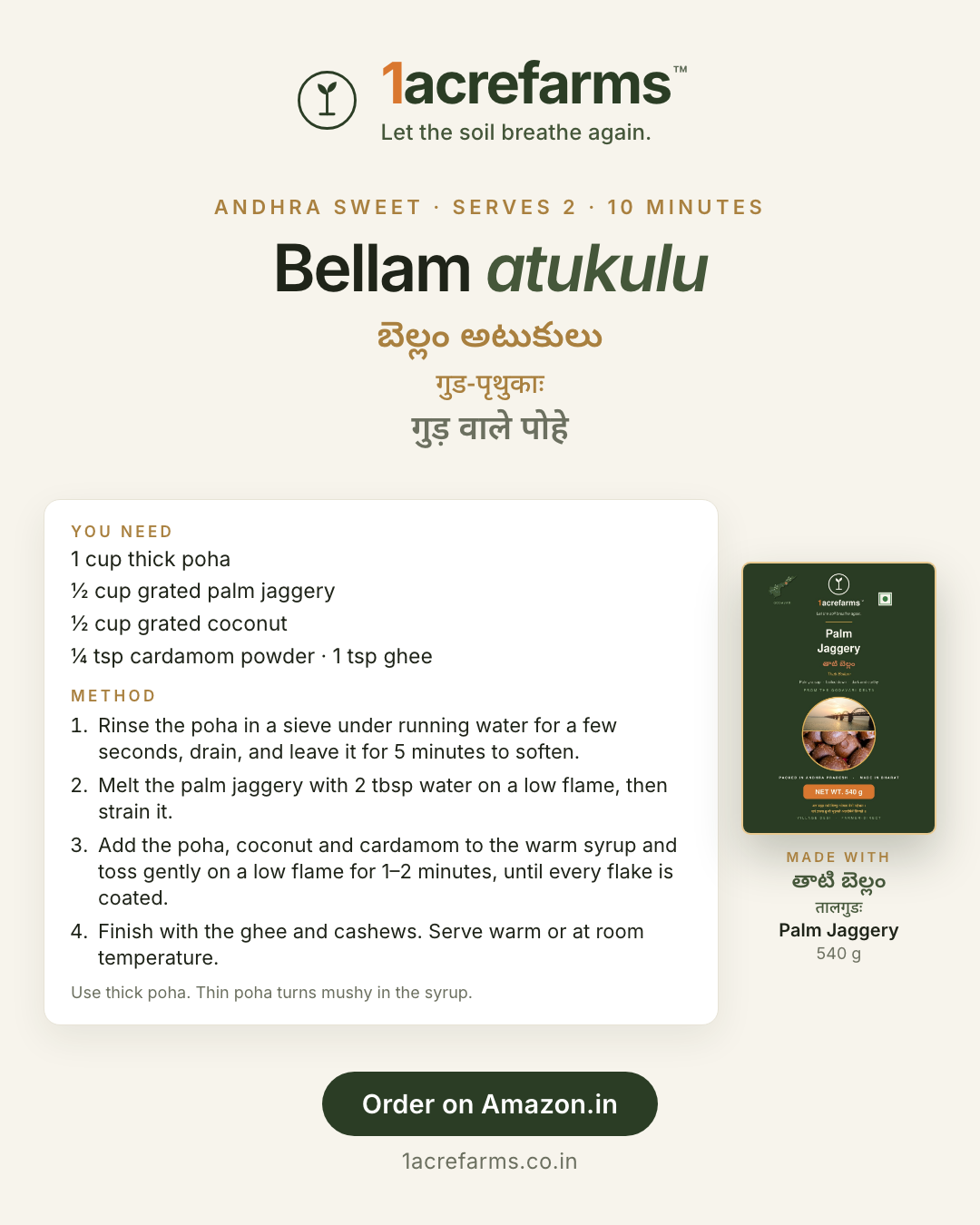
Bellam Atukulu (Sweet Poha with Palm Jaggery)
బెల్లం అటుకులు · गुड़ वाले पोहे · गुड-पृथुकाः · Bellam Atukulu · Gud Wale Pohe
Bellam atukulu is the 10-minute sweet of Telugu homes. It is the poha offered to Krishna on Krishnashtami, recalling Kuchela's gift, and it is also a quick sweet for children after school. The poha is only rinsed, never cooked in water, and then tossed in warm jaggery syrup.
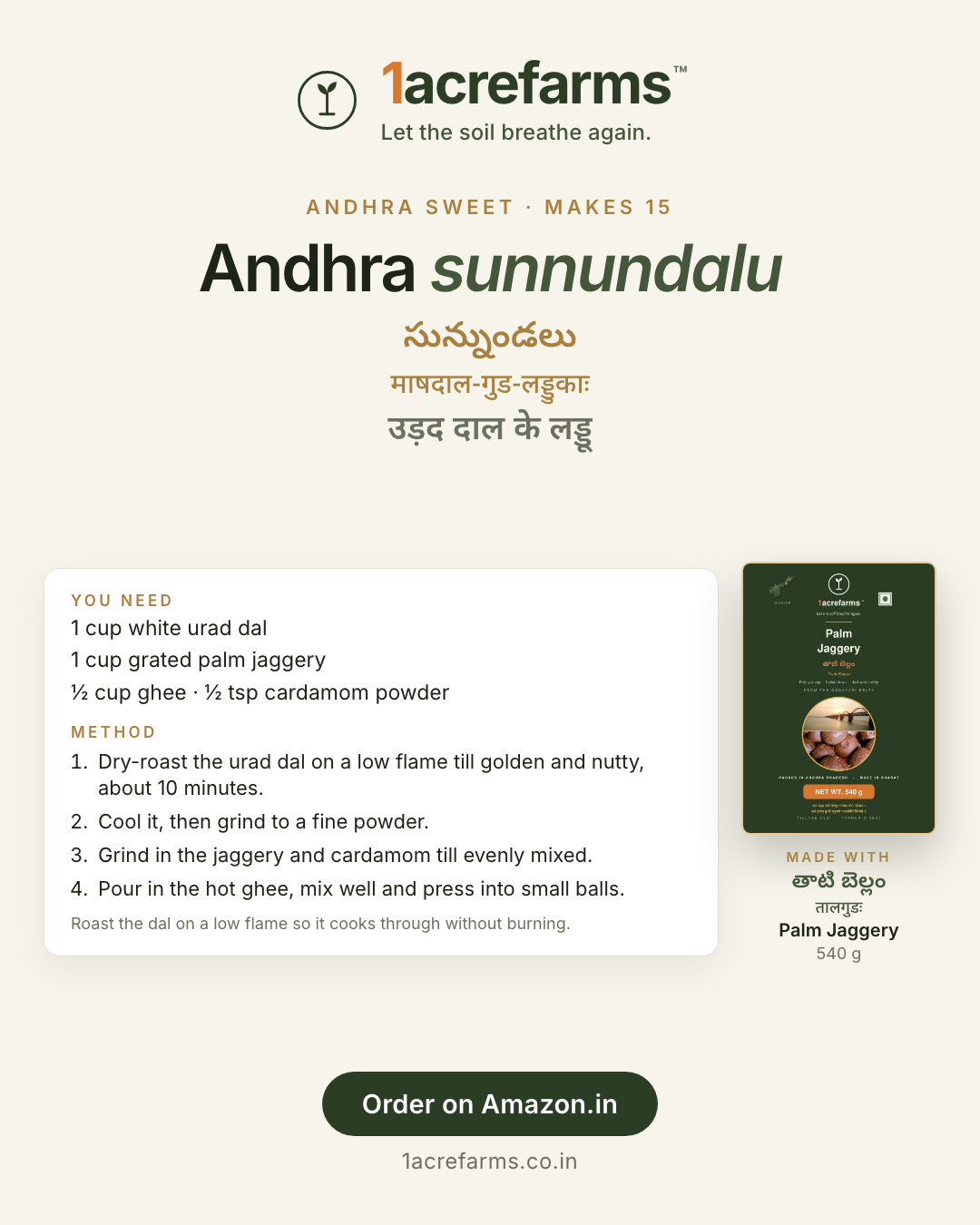
Our Thati Bellam palm jaggery gives it a deep brown colour and a rich, slightly smoky sweetness. This recipe serves 2.
- Prep5 min
- Cook5 min
- Total10 min
- Serves2
Prep includes 5 minutes for the rinsed poha to soften.
In short
Soften thick poha, toss it in warm palm jaggery syrup with coconut and cardamom, and finish with ghee.
మందపాటి అటుకులను కడిగి మెత్తబడనివ్వండి. గోరువెచ్చని తాటి బెల్లం పాకంలో కొబ్బరి, యాలకుల పొడితో కలిపి, చివరగా నెయ్యి వేయండి. మందపాటి అటుకులే వాడండి; పలుచని అటుకులు పాకంలో ముద్దగా అయిపోతాయి.
मोटे पोहे को धोकर नरम होने दें, गुनगुनी ताड़ के गुड़ की चाशनी में नारियल और इलायची के साथ मिलाएँ, और आख़िर में घी डालें। मोटा पोहा ही लें; पतला पोहा चाशनी में गल जाता है।
Ingredients serves 2
For the bellam atukulu
- 1 cup thick poha atukulu, about 100 g
- ½ cup grated palm jaggery about 90 g
- ½ cup grated coconut white part only
- ¼ tsp cardamom powder or the crushed seeds of 2–3 pods
- 1 tsp ghee
Optional
- 6–8 cashews, optional fried golden in ghee
Method
- Put the poha in a sieve and pick out any bits of husk.
- Rinse the poha in a sieve under running water for a few seconds, drain, and leave it for 5 minutes to soften. It should feel soft when pressed, but not wet.
- Grate the palm jaggery finely, breaking up any hard lumps.
- Melt the palm jaggery with 2 tbsp water on a low flame, then strain it. Wipe the pan and pour the syrup back in.
- If you are using cashews, fry them in a little ghee till golden.
- Add the poha, coconut and cardamom to the warm syrup and toss gently on a low flame for 1–2 minutes, until every flake is coated. Use a light hand so the flakes do not break.
- Take the pan off the heat as soon as the flakes are coated; longer cooking makes them chewy.
- Finish with the ghee and cashews. Serve warm or at room temperature.
Tips
- Use thick poha. Thin poha turns mushy in the syrup.
- Do not soak the poha in a bowl of water; a quick rinse is enough, or it turns soft and sticky.
- Keep the syrup warm, not bubbling, when the poha goes in, so the flakes coat evenly.
Variations
- Cane jaggery: use the same amount of grated cane jaggery for a lighter colour and a caramel-like sweetness.
- With milk: pour 2–3 tbsp warm milk over the finished poha for a softer sweet.
- With sesame: add 1 tbsp roasted sesame seeds along with the coconut.
Serving
Serve it as naivedyam on Krishnashtami, or as a quick sweet for children after school.
Storage
Best eaten the day it is made. Keep leftovers covered in the fridge and eat them the next day; the poha firms up as it stands.
Questions
Which poha is best for bellam atukulu?
Thick poha (atukulu). It holds its shape in the warm syrup; thin poha turns mushy.
Can I make bellam atukulu with cane jaggery?
Yes. Use the same amount of grated cane jaggery (cheruku bellam). It turns lighter in colour, with a caramel-like sweetness.
Why is my bellam atukulu sticky?
The poha was soaked or cooked too long. Rinse it for only a few seconds, and take the pan off the heat as soon as every flake is coated.
Why is it made on Krishnashtami?
It recalls the story of Kuchela, who brought a handful of poha to his friend Krishna as his only gift.