Coastal curry · serves 4
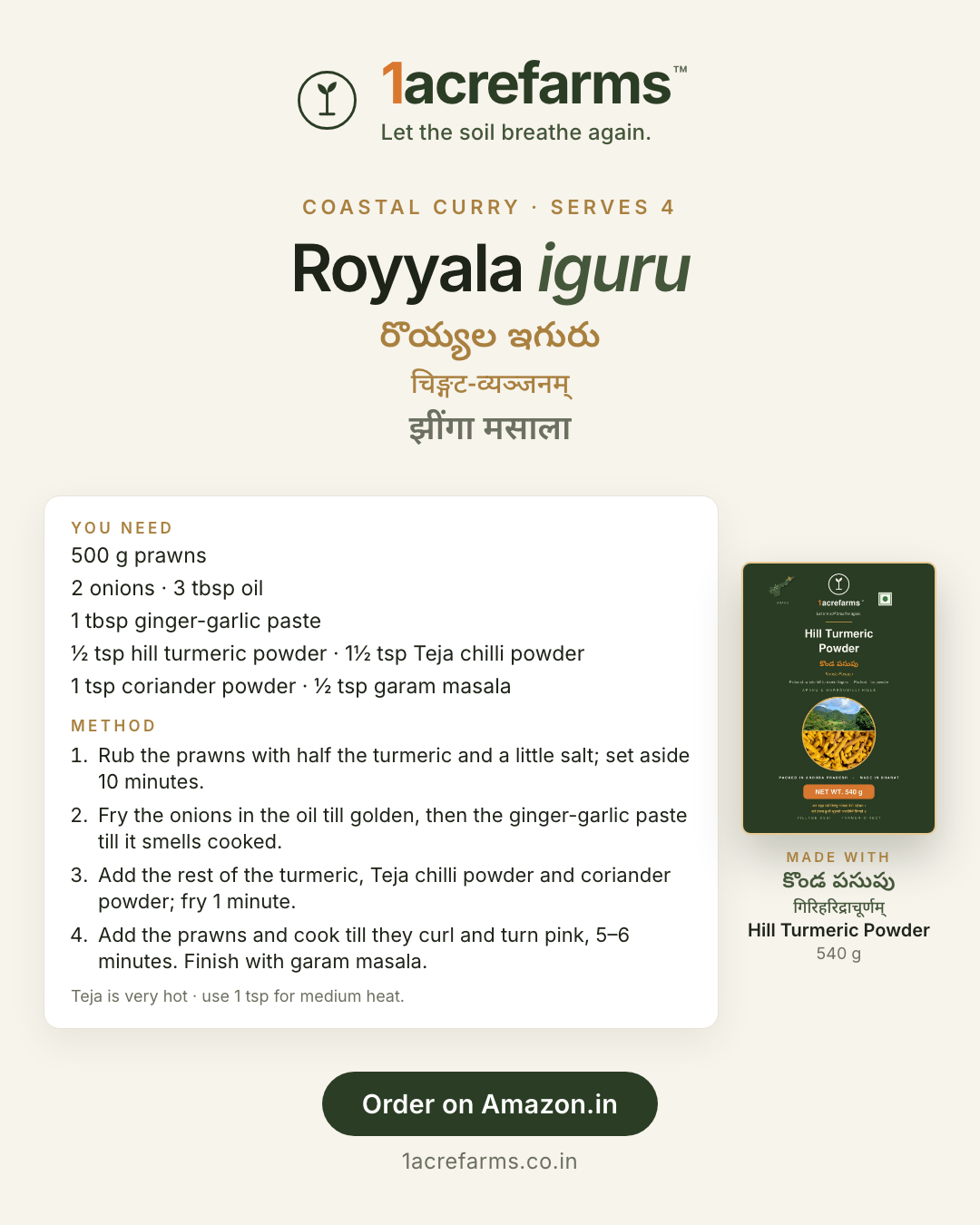
Royyala Iguru (Andhra Prawn Roast)
రొయ్యల ఇగురు · झींगा मसाला · चिङ्गट-व्यञ्जनम् · Royyala Iguru · Jhinga Masala
Iguru is the Andhra way of cooking meat or prawns down in a thick onion masala until almost dry, so the spices cling to every piece. Royyala iguru comes from the coastal districts, from Nellore to Godavari to Srikakulam, where prawns from the backwaters and the sea are a Sunday lunch with rice.
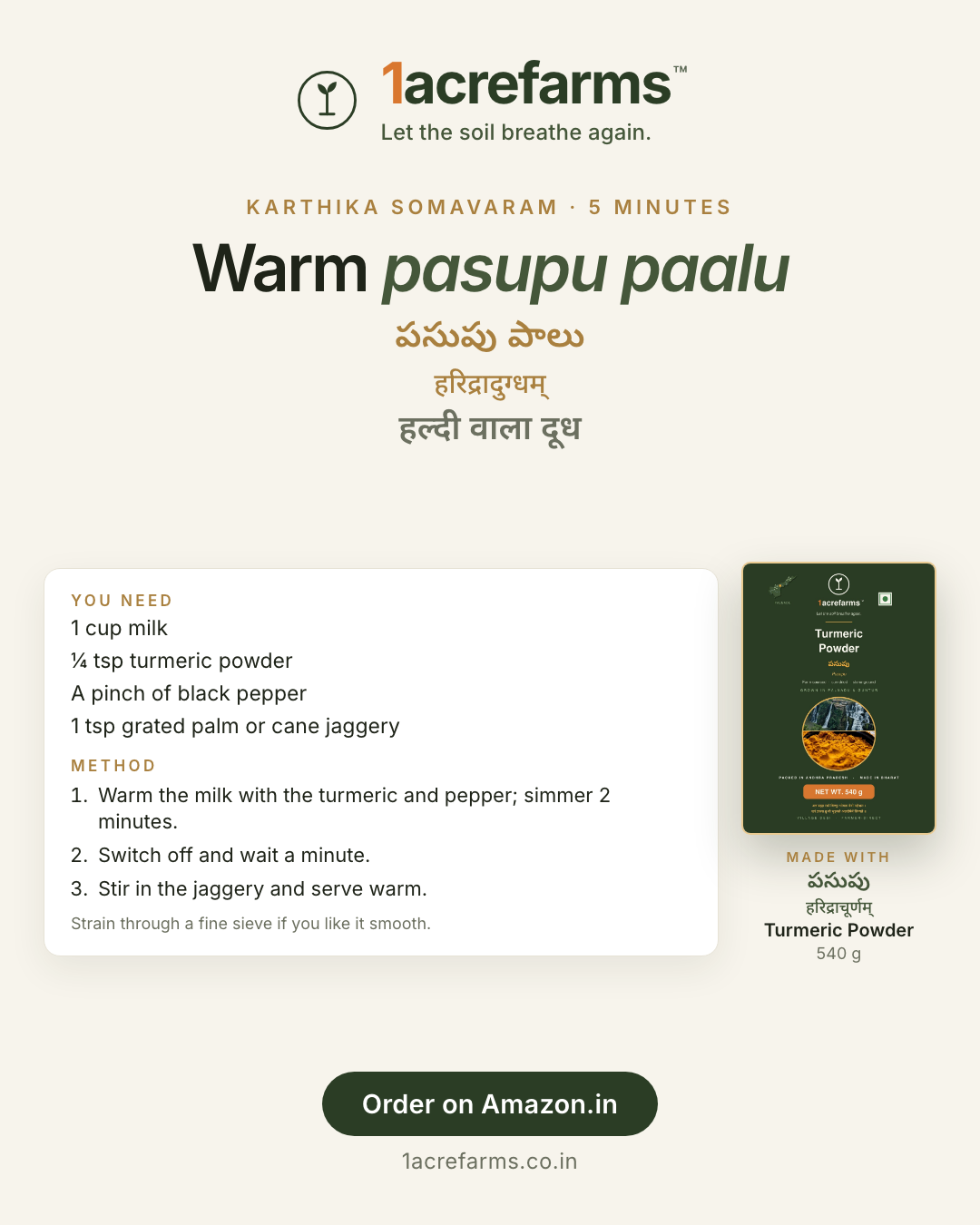
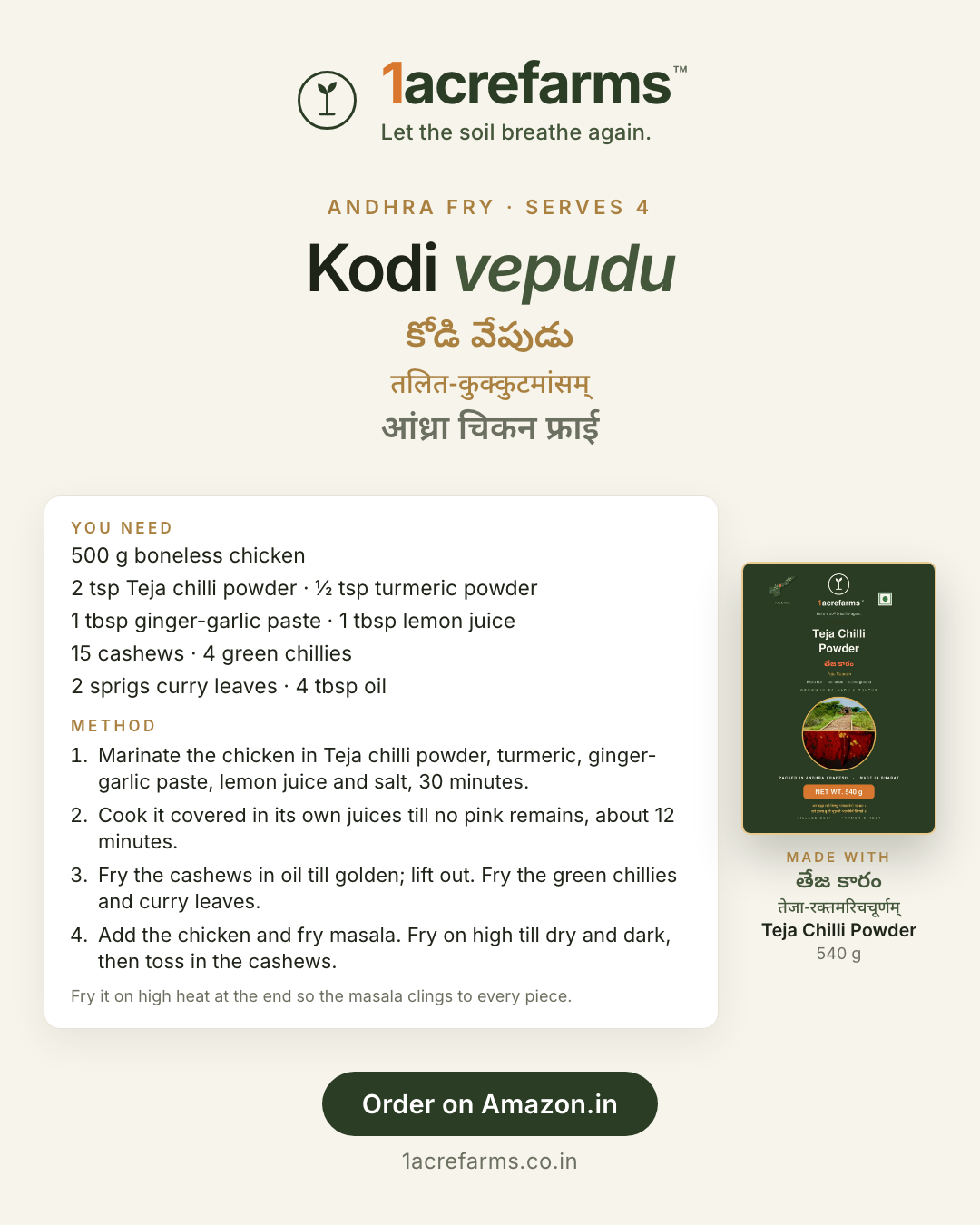
Our hill turmeric powder (Konda Pasupu) goes on the prawns first and into the masala. Teja chilli powder brings the deep red colour and strong heat coastal homes like, so scale it to your table.
- Prep20 min
- Cook25 min
- Total45 min
- Serves4
Prep includes cleaning the prawns and the 10-minute rest with turmeric.
In short
Rub prawns with turmeric and salt. Fry onions and ginger-garlic paste, add Teja chilli powder and coriander powder, then cook the prawns in the masala till it coats them.
రొయ్యలకు పసుపు, ఉప్పు పట్టించండి. నూనెలో ఉల్లిపాయలు, అల్లం వెల్లుల్లి ముద్ద వేయించి, తేజ కారం, ధనియాల పొడి వేసి, రొయ్యలు వేసి మసాలా పట్టేవరకు వేయించండి. రొయ్యలు గులాబీ రంగులోకి మారి వంగగానే ఉడికినట్టు; ఎక్కువసేపు ఉడికిస్తే గట్టిపడతాయి. తక్కువ కారం కావాలంటే 1 చెంచా తేజ కారం చాలు.
झींगों पर हल्दी और नमक लगाएँ। तेल में प्याज़ और अदरक-लहसुन पेस्ट भूनें, तेजा मिर्च पाउडर और धनिया पाउडर डालें, फिर झींगे डालकर मसाला लिपटने तक पकाएँ। झींगे गुलाबी होकर मुड़ जाएँ तो पक गए; ज़्यादा पकाने से सख़्त हो जाते हैं। कम तीखा चाहिए तो 1 छोटा चम्मच तेजा मिर्च पाउडर काफ़ी है।
Ingredients serves 4
For the prawns
- 500 g prawns medium size, shelled and deveined, weighed after cleaning
- ¾ tsp salt divided, or to taste
For the masala
- 3 tbsp oil groundnut oil is usual
- ½ tsp mustard seeds
- 2 onions medium, finely chopped
- 2 green chillies slit
- 1 sprig curry leaves
- 1 tbsp ginger-garlic paste
- 1 tomato (optional) small, finely chopped
- ½ tsp hill turmeric powder Konda Pasupu; ¼ tsp for the prawns, ¼ tsp for the masala
- 1½ tsp Teja chilli powder very hot; use 1 tsp for medium heat, ½ tsp for mild
- 1 tsp coriander powder
- ½ tsp garam masala
- ¼ cup water
- 2 tbsp chopped coriander leaves
Method
- Shell and devein the prawns, rinse them well and drain in a colander.
- Rub the prawns with half the turmeric and a little salt; set aside 10 minutes. Use ¼ tsp turmeric and ¼ tsp of the salt.
- Heat the oil in a heavy kadai on medium heat and add the mustard seeds. When they splutter, add the green chillies and curry leaves.
- Fry the onions in the oil till golden, then the ginger-garlic paste till it smells cooked. The onions take about 8–10 minutes; the paste about 1 minute, until the raw smell goes.
- If using the tomato, add it now and cook until soft and pulpy, about 4 minutes.
- Turn the heat to low. Add the rest of the turmeric, Teja chilli powder and coriander powder; fry 1 minute. Add the remaining salt and stir so the spices do not catch.
- Pour in the water and cook the masala on medium heat until the oil starts to separate at the edges, about 3–4 minutes.
- Add the prawns and cook till they curl and turn pink, 5–6 minutes. Finish with garam masala. Stir often on medium-high heat so the masala dries and coats the prawns.
- Check doneness: prawns are cooked when they are pink and opaque all the way through and curled into a loose C. Cut one open if unsure; there should be no grey, see-through centre.
- Taste for salt, scatter the coriander leaves and switch off. Do not keep cooking once the prawns are done, or they turn rubbery.
Tips
- Teja is very hot: 1½ tsp makes a fiery iguru the way coastal homes like it; use 1 tsp for medium heat, or ½ tsp for mild.
- Fry the onions until properly golden; the colour and body of an iguru come from well-browned onions.
- Prawns cook fast. A loose C shape means done; a tight O means overcooked and chewy.
- Pat the prawns dry after rinsing so they fry in the masala instead of stewing in water.
Variations
- Gongura royyalu: stir in ½ cup gongura leaves, wilted in a little oil and mashed, with the prawns.
- Coconut: add 2 tbsp grated coconut or 3 tbsp thick coconut milk in the last 2 minutes for a softer, richer masala.
- Gravy style: add ¾ cup water after the prawns for a thinner royyala kura to pour over rice.
Serving
Serve hot with steamed rice and a spoon of ghee, or with rasam or sambar rice. It also goes well with chapati.
Storage
Keep leftovers covered in the fridge and eat within 1 day. Reheat in a pan only until steaming hot all the way through; longer reheating makes the prawns tough.
Questions
How do I know when prawns are cooked?
They turn pink and opaque all the way through and curl into a loose C shape, usually in 5–6 minutes in the hot masala. A grey, see-through centre means they need a little longer.
What is the difference between iguru and vepudu?
Iguru is cooked down in an onion masala until thick and almost dry, with the masala clinging to the prawns. Vepudu is a fry, with less or no onion gravy, cooked until the prawns are crisp at the edges.
How can I make royyala iguru less spicy?
Use 1 tsp Teja chilli powder for medium heat or ½ tsp for mild, and skip the green chillies. A tablespoon of curd or coconut milk at the end also softens the heat.
Can I use frozen prawns?
Yes. Thaw them in the fridge, drain them well and pat them dry before rubbing with turmeric and salt. Frozen prawns release more water, so cook the masala a little longer.