Guide · turmeric
Hill turmeric (konda pasupu) or turmeric: the difference
కొండ పసుపు · పసుపు · पहाड़ी हल्दी · हल्दी · गिरिहरिद्राचूर्णम् · हरिद्राचूर्णम् · Konda Pasupu · Pasupu
Konda pasupu means hill turmeric: turmeric grown in hill country. In Andhra Pradesh that includes the agency hills of the Eastern Ghats around Araku Valley, Chintapalle and Paderu, where most tribal farmers grow turmeric. Plains turmeric grows on farmland in districts such as Guntur.
FSSAI's standard for turmeric powder is the same wherever it grew. What changes is the place, the variety, and how it is grown and dried. This guide covers each of those, what curcumin is, how to cook with each and how to compare two turmerics fairly. There is a Telugu section further down.
In short
Hill turmeric (konda pasupu) grows in hill country, such as the Eastern Ghats around Araku, where most tribal farmers grow it. Plains turmeric grows on farmland in districts such as Guntur. Both are boiled, dried and ground, and FSSAI holds both to the same standard. Curcumin, the yellow pigment in turmeric, changes with variety, soil, climate and processing, so the word hill or plains does not tell you how much a turmeric has. Cook with both the same way.
కొండ పసుపు తూర్పు కనుమల కొండల్లో, అరకు చుట్టుపక్కల పండుతుంది; అక్కడి గిరిజన రైతుల్లో ఎక్కువమంది పసుపు పండిస్తారు. మైదాన పసుపు గుంటూరు లాంటి జిల్లాల్లోని పొలాల్లో పండుతుంది. రెండింటినీ ఉడకబెట్టి, ఎండబెట్టి, పొడి చేస్తారు; FSSAI ప్రమాణం రెండింటికీ ఒకటే. పసుపుకు రంగు ఇచ్చే కర్కుమిన్ శాతం పసుపు రకం, నేల, వాతావరణం, తయారీ విధానాన్ని బట్టి మారుతుంది, కాబట్టి "కొండ" లేదా "మైదానం" అనే మాట అది ఎంత ఉందో చెప్పదు. రెండింటినీ వంటల్లో ఒకేలా వాడండి.
पहाड़ी हल्दी पूर्वी घाट की पहाड़ियों में, अरकू के आसपास उगती है, जहाँ के ज़्यादातर आदिवासी किसान हल्दी उगाते हैं। मैदानी हल्दी गुंटूर जैसे ज़िलों के खेतों में उगती है। दोनों को उबालकर, सुखाकर पीसा जाता है, और FSSAI का मानक दोनों के लिए एक ही है। हल्दी को पीला रंग देने वाले करक्यूमिन की मात्रा किस्म, मिट्टी, जलवायु और प्रोसेसिंग से बदलती है, इसलिए सिर्फ़ "पहाड़ी" या "मैदानी" शब्द से पता नहीं चलता कि उसमें कितना है। दोनों को खाने में एक ही तरह इस्तेमाल करें।
At a glance
| Hill turmericకొండ పసుపుगिरिहरिद्राचूर्णम् | Plains turmericమైదాన పసుపుहरिद्राचूर्णम् | |
|---|---|---|
| Where it grows | Hill country, such as the Paderu agency hills of the Eastern Ghats: Araku Valley, Chintapalle and Paderu | Farmland in districts such as Guntur |
| Who grows it | Most tribal farmers in the Paderu agency | Farms in Guntur district, where turmeric is one of the commercial crops, with cotton, chillies and tobacco |
| In the ground | The old local variety has often been left for 2 to 3 seasons, up to 18 to 24 months; newer varieties such as Roma are dug after one season | ICAR-IISR's general guide: a well-managed crop is ready in 7 to 9 months, usually dug between January and March |
| After digging | Boiled and dried by hand, which takes a lot of labour and firewood | The usual steps: boiled, sun-dried, then polished by hand or by machine |
| FSSAI standard | The same one for both: at least 2% curcuminoids on a dry basis, and added colour is not allowed | |
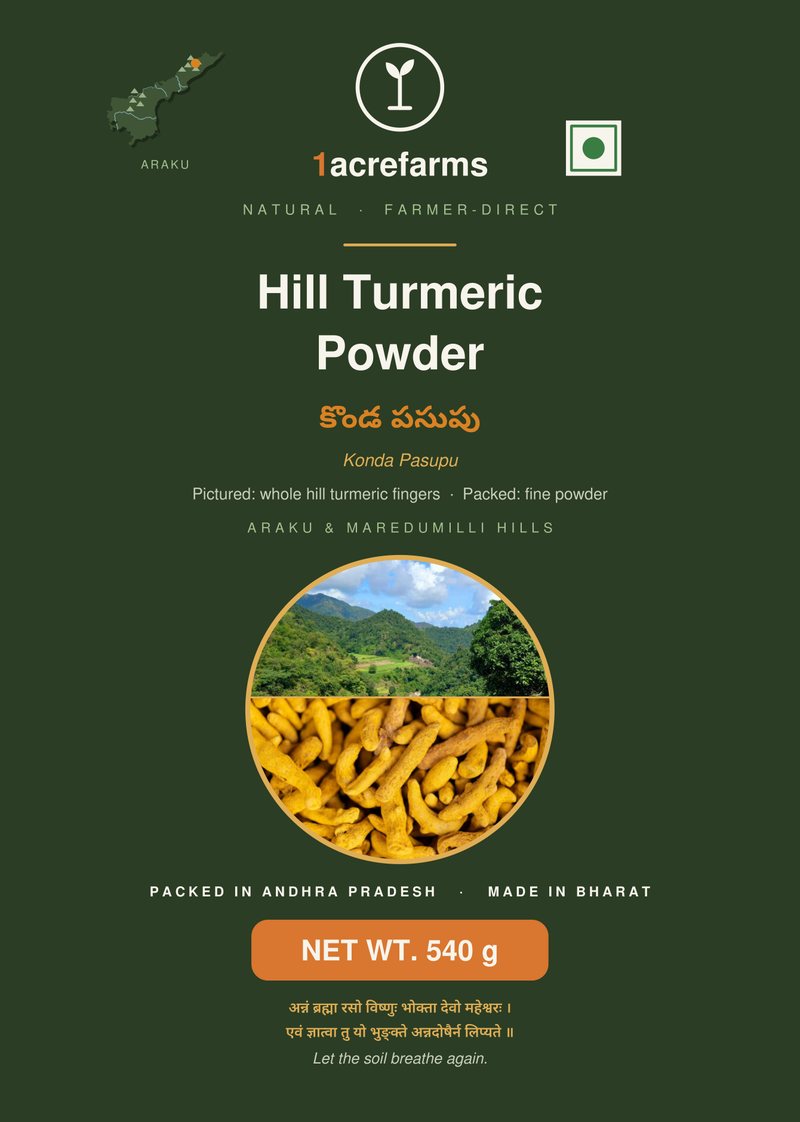
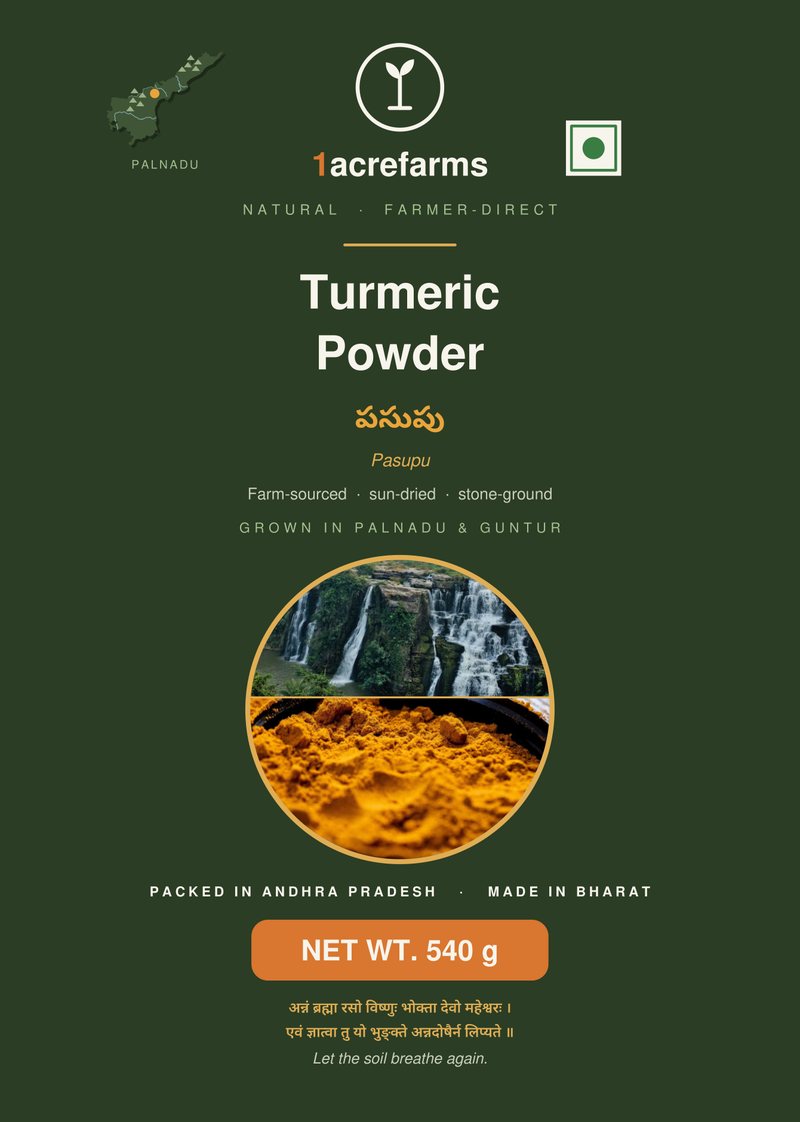
| Our pack says | Araku and Maredumilli hills. Whole hill turmeric fingers, packed as fine powder | Grown in Palnadu and Guntur. Sun-dried, stone-ground |
The rows above describe each region in general, from the sources at the end of this page. Only the last row is about our packs.
Where each grows
Hill turmeric. ICAR-IISR's report on the Paderu agency, the tribal hill country of the Eastern Ghats that takes in Araku Valley, Chintapalle and Paderu, says turmeric is grown there by most tribal farmers.
Plains turmeric. Guntur district lists turmeric among its commercial crops, with cotton, chillies and tobacco. Duggirala, in Guntur, has a turmeric processing cluster that makes processed turmeric and turmeric powder. In 2022, Guntur district was divided into three districts: Guntur, Palnadu and Bapatla.
Turmeric can be grown either way: ICAR-IISR says it can be grown rain-fed or irrigated, from sea level up to 1,500 m.
Our hill turmeric comes from the Araku and Maredumilli hills, and our turmeric is grown in Palnadu and Guntur. Both are packed in Narasaraopet.
How each is grown and dried
In the hills. ICAR-IISR's Paderu report says tribal farmers there have grown a local variety called Chayapasupu, or Chintapalle Local, for ages. It has been common practice to leave it in the ground for two or three seasons, up to 18 to 24 months, before digging. From 2011-12, ICAR-IISR and the Horticultural Research Station at Chintapalle tested varieties for the hill zone and brought in Roma and IISR Pragati, which are dug after one season. The report says tribal farmers boil and dry their turmeric by hand, which takes a lot of labour and firewood; the project gave four farmer producer organisations turmeric boilers and polishers.
The usual steps. ICAR-IISR's turmeric guide describes how the crop is handled after it is dug:
- Dig it when the leaves dry and turn light brown to yellowish. A well-managed crop is ready seven to nine months after planting, usually between January and March.
- Separate the fingers from the bulbs and boil them within 3 or 4 days of digging, in water until soft: 45 to 60 minutes for fingers and 90 minutes for bulbs. Boiling takes away the raw smell, cuts the drying time and gives an even colour.
- Dry them in the sun in layers 5 to 7 cm deep, heaped and covered at night. It may take 10 to 12 days for the moisture to fall below 12%.
- Polish off the rough, dull, scaly skin by rubbing, by hand or in a turning drum.
- Grind the dried turmeric into powder. FSSAI allows turmeric powder up to 10% moisture.
Fingers are the side branches of the turmeric rhizome, usually 2.5 to 7.5 cm long; bulbs are the shorter, thicker central rhizome. Our hill turmeric pack says whole hill turmeric fingers, packed as fine powder. Our turmeric pack says sun-dried and stone-ground.
Curcumin, and how they look
Curcumin is the yellow pigment in turmeric, ICAR-IISR says. FSSAI measures a turmeric powder's colouring power as its curcuminoid content, and asks for at least 2% on a dry basis. That standard is the same for hill and plains turmeric.
Curcumin changes from one turmeric to the next:
- Variety. ICAR-IISR's 2022 turmeric guide lists its own varieties from 4.3% curcumin (Suvarna) to 6.5% (IISR Prabha).
- Soil and climate. ICAR-IISR notes that turmeric from different regions differs in quality because of soil, climate and farming practice. Its Paderu report calls curcumin content highly sensitive to changes in the growing environment.
- Processing. Handling and processing after harvest add to the differences, and boiling too long or too short affects the quality of the dried turmeric.
So the word hill or plains on a pack does not tell you a turmeric's curcumin content. A food testing lab can measure the curcuminoid content of a batch.
How they look. Colour varies too. ICAR-IISR describes its varieties' rhizomes as ranging from reddish yellow to deep orange. Processing counts as well: boiling evens out the colour, drying in too thin a layer can spoil it, and polishing by hand leaves a rough, dull surface.
Cooking with each, and keeping it
- Use either one wherever you use turmeric: dal, sambar, rasam, curries and pulihora.
- Add it on a low flame so it does not burn.
- To swap one for the other, start with the amount you usually use and adjust to taste.
- Try either one in pasupu annam, nimmakaya pulihora, tomato pappu or pasupu paalu.
Keeping it well.
- Keep the pack zipped shut, or move the powder to a dry, airtight jar.
- Use a dry spoon every time.
- Store it in a cool, dry place, away from light.
- Use it within the best-before date on the pack.
How to compare two turmerics fairly
- Compare powder with powder. FSSAI allows whole turmeric up to 12% moisture and powder up to 10%, so the two are held to different limits.
- Read both packs: where it was grown, the batch or lot number, the best-before date and the FSSAI licence or registration number. Note the batch numbers, so you know which lots you compared.
- Do the water check on both, side by side, with the same amount in the same kind of glass. The steps are in how to check turmeric powder at home.
- Cook the same dish with each, with the same amount, and compare the colour and taste.
- Do not judge curcumin by colour alone. A brighter yellow is not a measurement; a food testing lab can measure curcuminoid content.
తెలుగులో: తేడా ఏమిటి?
కొండ పసుపు गिरिहरिद्राचूर्णम् · మైదాన పసుపు हरिद्राचूर्णम्
కొండ పసుపు అంటే కొండ ప్రాంతాల్లో పండే పసుపు. తూర్పు కనుమల్లోని పాడేరు ఏజెన్సీలో (అరకు లోయ, చింతపల్లి, పాడేరు) గిరిజన రైతుల్లో ఎక్కువమంది పసుపు పండిస్తారు. అక్కడి రైతులు చాలా కాలంగా ఛాయ పసుపు (చింతపల్లి లోకల్) అనే పాత రకాన్ని పండిస్తున్నారు. దాన్ని రెండు మూడు సీజన్లు, 18 నుంచి 24 నెలల వరకు, తవ్వకుండా భూమిలోనే ఉంచడం అక్కడ మామూలు. 2011-12 నుంచి ICAR-IISR, చింతపల్లి ఉద్యాన పరిశోధన స్థానం రెండూ కలిసి కొండ ప్రాంతానికి తగిన రకాలను పరీక్షించి, రోమా, IISR ప్రగతి అనే కొత్త రకాలను ప్రవేశపెట్టాయి; ఇవి ఒక్క సీజన్లోనే తవ్వకానికి వస్తాయి.
మైదాన ప్రాంతాల పసుపు గుంటూరు లాంటి జిల్లాల్లో పండుతుంది. గుంటూరు జిల్లాలో పత్తి, మిరప, పొగాకుతో పాటు పసుపు కూడా ఒక వాణిజ్య పంట. గుంటూరు జిల్లా దుగ్గిరాలలో పసుపు ప్రాసెసింగ్ క్లస్టర్ ఉంది. 2022లో గుంటూరు జిల్లాను గుంటూరు, పల్నాడు, బాపట్ల అనే మూడు జిల్లాలుగా విభజించారు.
తవ్విన పసుపు కొమ్ములను, దుంపలను వేరు చేసి, మెత్తబడే వరకు నీటిలో ఉడకబెడతారు. తర్వాత 10 నుంచి 12 రోజులు ఎండలో ఆరబెట్టి, పాలిష్ చేసి, పొడి చేస్తారు. ఉడకబెట్టడం వల్ల పచ్చి వాసన పోతుంది, త్వరగా ఆరుతుంది, రంగు అంతటా ఒకేలా వస్తుంది. పాడేరు ఏజెన్సీలో గిరిజన రైతులు ఉడకబెట్టడం, ఆరబెట్టడం చేతితోనే చేస్తారు; దానికి శ్రమ, కట్టెలు ఎక్కువగా పడతాయి.
FSSAI ప్రమాణం ప్రకారం పసుపు పొడిలో తేమ లేని బరువు లెక్కన కర్కుమినాయిడ్లు కనీసం 2% ఉండాలి, ఏ రంగూ కలపకూడదు, తేమ 10% మించకూడదు. ఈ ప్రమాణం కొండ పసుపుకు, మైదాన పసుపుకు ఒకటే.
కర్కుమిన్ పసుపులో ఉండే పసుపు రంగు పదార్థం. దీని శాతం రకం, నేల, వాతావరణం, సాగు, తయారీ పద్ధతులను బట్టి మారుతుంది. ICAR-IISR రకాల్లోనే కర్కుమిన్ 4.3% నుంచి 6.5% వరకు ఉంది. కాబట్టి ప్యాక్ మీద "కొండ" లేదా "మైదానం" అనే మాట కర్కుమిన్ ఎంతో చెప్పదు. రంగును బట్టి మాత్రమే దాన్ని అంచనా వేయకండి; ఒక బ్యాచ్లో ఎంత ఉందో ఫుడ్ టెస్టింగ్ ల్యాబ్ కొలవగలదు.
- పసుపు వేసే ప్రతి వంటలో రెండింటినీ వాడొచ్చు: పప్పు, సాంబారు, రసం, కూరలు, పులిహోర.
- మాడిపోకుండా సన్నని మంటపై వేయండి.
- రెండింటినీ పోల్చాలంటే: పొడిని పొడితోనే పోల్చండి. ప్యాక్ మీద పండిన ప్రాంతం, బ్యాచ్ నంబర్, బెస్ట్ బిఫోర్ తేదీ, FSSAI నంబర్ చూడండి. రెండింటికీ పక్కపక్కనే నీటి పరీక్ష చేయండి.
- తడి లేని చెంచా వాడండి, ప్యాక్ జిప్ మూసి ఉంచండి. చల్లని, పొడి చోట, వెలుతురు తగలకుండా ఉంచండి.
మా కొండ పసుపు అరకు, మారేడుమిల్లి కొండల నుంచి వస్తుంది. మా మైదాన ప్రాంత పసుపు పల్నాడు, గుంటూరులో పండినది. రెండూ నరసరావుపేటలో ప్యాక్ చేసినవి.
Questions
What is konda pasupu?
Konda pasupu is Telugu for hill turmeric: turmeric grown in hill country. In Andhra Pradesh it grows in the Eastern Ghats, for example in the Paderu agency around Araku Valley and Chintapalle, where most tribal farmers grow turmeric.
Is hill turmeric different from regular turmeric?
FSSAI holds all turmeric powder to the same standard, wherever it grew. Hill and plains turmeric can differ in where they grow, the varieties grown, and how they are grown and dried. In the Paderu hills, for example, an old local variety has often been left in the ground for up to two years.
Does hill turmeric have more curcumin?
The word hill alone does not tell you. Curcumin changes with the variety, the soil and climate, and how the turmeric was boiled and dried. A food testing lab can measure the curcuminoid content of a batch.
What are the types of turmeric (haldi) in India?
ICAR-IISR says India grows many turmeric cultivars, mostly known by the name of the place where they are grown, such as Duggirala, Mydukur, Tekkurpet and Amalapuram. It has also released improved varieties such as IISR Prabha, IISR Prathibha and IISR Pragati.
Can I use hill turmeric instead of regular turmeric?
Yes. Use it wherever you use turmeric, start with the amount you usually use, and add it on a low flame so it does not burn.
Sources
- FSSAI: Food Products Standards regulations, chapter 2.9 (Version 4, 01.08.2025), 2.9.18 Turmeric (Haldi)
- ICAR-Indian Institute of Spices Research: Turmeric, extension pamphlet (March 2022), on the Spices Board India website
- ICAR-Indian Institute of Spices Research: Spices Varieties of ICAR-IISR (2022), preface
- ICAR-Indian Institute of Spices Research: Value chain model for promotion of spice farming systems in Paderu tribal agency area, Visakhapatnam
- Guntur district, Government of Andhra Pradesh: about the district